Sewer Line Repair & Replacement. We pinpoint the break so we only dig where we have to.
When the main sewer line fails, the anxiety isn't just about the plumbing. It's about the yard. It's about the heavy equipment, the landscaping, and the fear of a massive excavation bill. We understand that.
You can only ignore a slow drain for so long.
It usually starts small. A gurgling sound in the guest bathroom toilet. A shower that takes a little too long to drain. Maybe a faint, intermittent sewer smell near the laundry room. It's easy to write these off as minor quirks or blame the heavy spring rain.
But when the ground in the front yard gets permanently squishy, or sewage starts backing up into the lowest drain in the house, the avoidance phase is over. The main line is compromised.
Why main lines fail in Oklahoma soil.
Houses built decades ago were typically plumbed with cast iron or clay pipes. At the time, they were the standard. But cast iron rusts from the inside out. The bottom of the pipe rots away, creating a "belly" where waste settles instead of flowing to the city main.
Clay pipes have a different weakness: the joints. Over years of shifting Oklahoma soil and extreme drought-flood cycles, the joints separate. Once there is a microscopic gap, tree roots find the moisture. They invade the line, expanding until they create a massive root ball that completely chokes off the flow. Snaking the line might punch a temporary hole through the roots, but it won't fix the separated pipe. If you're still at the gurgling stage and not sure what you're dealing with, our drain and sewer page walks through how we tell a clog from a broken line.
We run a camera before we touch a shovel.
Bottom Line Up Front: A lot of companies will hit a blockage with an auger, claim the line is collapsed, and immediately hand you a $15,000 quote for a full yard excavation. We don't operate that way.
Before we quote a repair, we send a high-resolution sewer camera down the line. You see exactly what we see on the screen. We locate the exact depth and location of the failure. Sometimes, the entire line is indeed rotted out. But often, it's a localized break, a single offset joint, or a specific root intrusion.
Spot repairs vs. full replacements.
Because we locate the exact failure point, we can give you options based on the actual mechanics of the problem.
If you have a single section of crushed pipe under the driveway, but the rest of the line is structurally sound, we can perform a targeted spot repair. We excavate only the damaged section, cut out the bad pipe, and tie in a new section.
If the entire line is deteriorated—if the cast iron has completely channeled out or the clay pipe is shattered in multiple places—we will recommend a full replacement. We will explain exactly why, show you the camera footage as proof, and map out the excavation plan.
"Best plumbing job I’ve ever had! They were super quick with it, and very good customer service and great prices! Would definitely recommend."
Heavy-wall Schedule 40 PVC. Built to last.
When we replace a sewer line, we don't use thin, cheap materials to save a few bucks. We lay solid Schedule 40 PVC pipe. It has a thick, rigid wall that resists root intrusion and handles soil settlement far better than legacy materials.
We bed the pipe properly to ensure the correct slope, secure the fittings with heavy-duty transition bands, and install accessible cleanouts so the line can be easily serviced in the future. We do it to code, and we do it right the first time.

We respect your property.
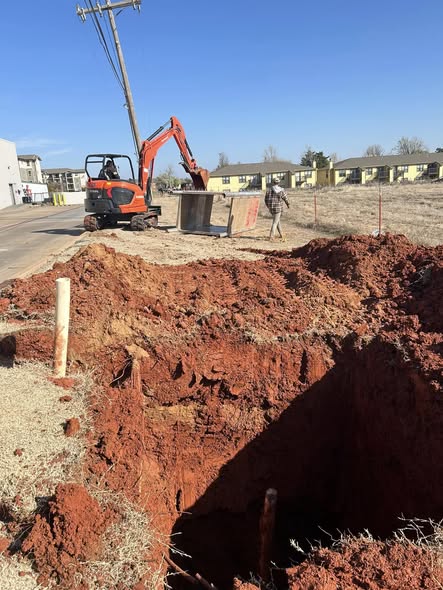
We know that bringing an excavator onto your property is stressful. We treat your yard, your fence, and your landscaping with respect. We keep the site as clean as a major excavation allows, and when the new pipe is in the ground, we backfill and grade the area properly.
"Had a backed up sewer line on a holiday. They were able to get out here within a couple hours, solve the problem within 30 minutes, and give advice for the future. Prices were very reasonable too."
Questions about sewer line repair.
Trenchless technologies like pipe bursting or CIPP lining have their place, but they require the existing pipe to have enough structural integrity to hold the liner. If a pipe is completely collapsed or severely bellied (holding a lot of water), a trenchless liner will simply conform to the bellied shape, and you will still have backups. We prefer physical pipe replacement because it allows us to correct the grade and verify the integrity of the soil bedding, ensuring the problem never returns.
Full breakdown → when trenchless actually works
Cast iron pipes installed before 1980 typically last 40 to 60 years before channeling (rotting out at the bottom) occurs. Clay pipes can last 50+ years but are highly susceptible to root intrusion at their joints. Modern Schedule 40 PVC, when properly bedded and installed with the correct slope, can easily last 100 years or more.
Full breakdown → how long each material really lasts
Standard homeowner's insurance typically covers the collateral damage caused by a backup (like flooded floors), but usually does not cover the repair of the pipe itself unless you have a specific service line rider. We always recommend checking your policy's specific endorsements.
Full breakdown → collapse vs. gradual wear
Most residential spot repairs and section replacements can be completed in a single day. If the line requires extensive trenching under a concrete slab, it may take two to three days to safely saw-cut, excavate, repair, backfill, and pour the new concrete.
Full breakdown → what sets the replacement clock
From the Field Notes
Is Trenchless Sewer Repair Worth It?
When you can fix the line without trenching the yard — and when you can’t.
Read itInsuranceDoes Insurance Cover a Sewer Line Repair?
Sudden collapse vs. gradual wear — the distinction that decides your claim.
Read it